
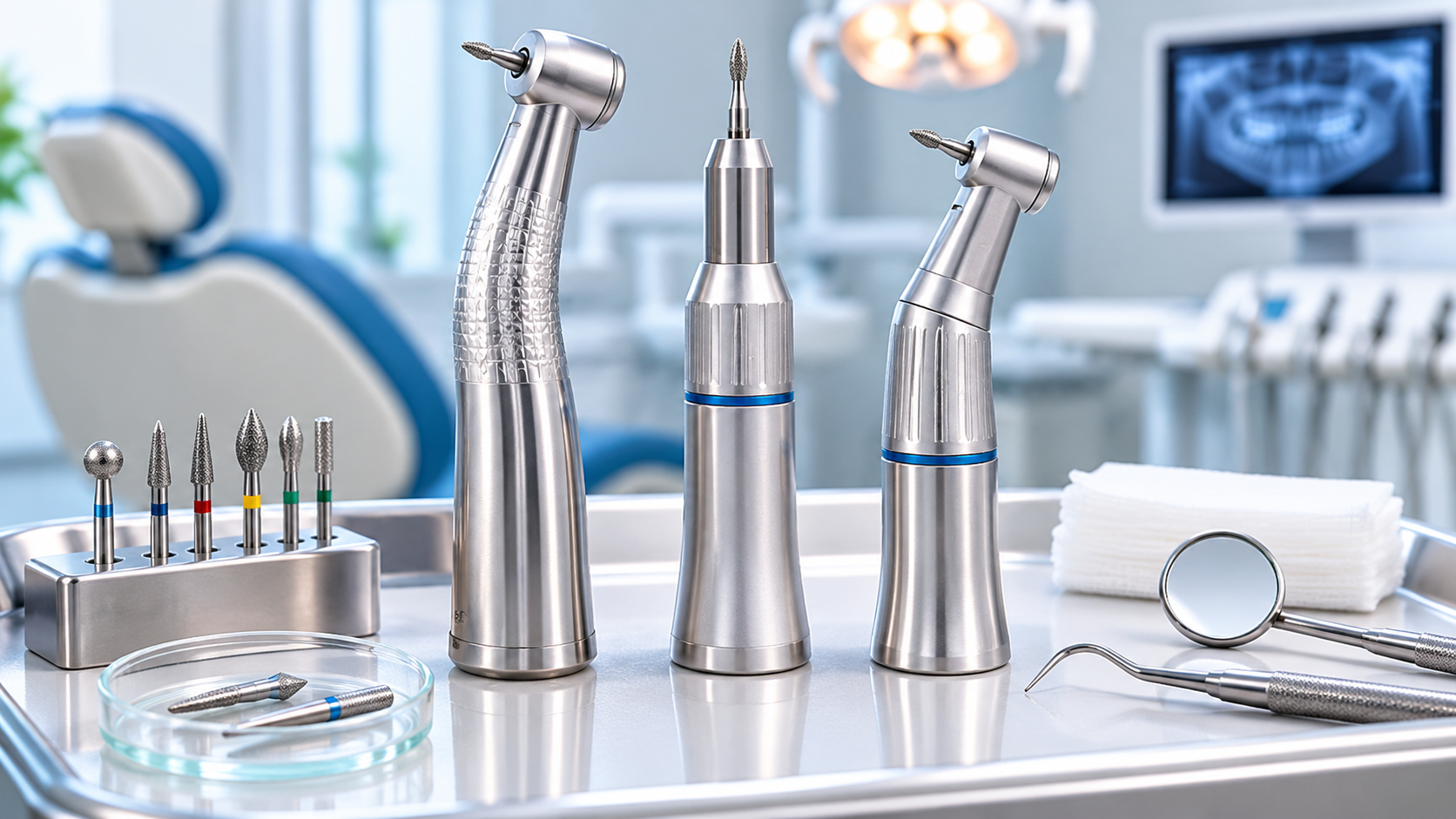
Learn about different types of dental handpieces, including high-speed, low-speed, straight and contra-angle models. Understand their working principles, clinical applications, RPM, gear ratios and essential maintenance practices.
Dental handpieces are among the most frequently used instruments in modern dental practice. They help dentists perform procedures that require controlled cutting, shaping, polishing and finishing of tooth structures and restorative materials.
From cavity preparation and crown reduction to polishing and laboratory procedures, different types of dental handpieces are designed to perform specific functions.
However, not every handpiece works in the same way. High-speed air turbine handpieces, low-speed handpieces, straight handpieces and contra-angle handpieces have different designs, speed characteristics and clinical applications.
Understanding these differences helps dental professionals select the appropriate instrument for their clinical requirements.
In this article, we explore the major types of dental handpieces, how they work, their clinical applications, important technical specifications and the role of proper maintenance in their performance.
What Is a Dental Handpiece?
A dental handpiece is a rotary dental instrument used to operate burs, polishing attachments and other compatible rotary instruments.
It is connected to a dental delivery system, air supply, electric motor or another compatible drive unit, depending on its design.
The handpiece transfers rotational energy to the attached instrument, allowing the dentist to perform different procedures with controlled movement and speed.
Dental handpieces are commonly used for:
- Tooth preparation and cavity cutting.
- Crown and bridge preparation.
- Removal of carious tooth structure.
- Finishing and polishing restorations.
- Adjustment of dental materials.
- Selected surgical and laboratory procedures.
Different handpiece designs are selected according to the required speed, torque, bur compatibility and clinical application.
How Does a Dental Handpiece Work?
A dental handpiece works by converting energy from an external power source into rotational movement.
The source of power depends on the type of handpiece.
Air-Driven Handpieces
Air-driven handpieces use compressed air to rotate an internal turbine.
The turbine transfers rotational movement to the bur, allowing high-speed cutting.
These handpieces are commonly used for cavity preparation, crown preparation and other procedures requiring high rotational speed.
Electric Handpieces
Electric handpieces are powered by an electric motor.
The motor provides controlled rotational movement and can offer different speed and torque characteristics depending on the system and attachment.
Electric handpiece systems are used in restorative, prosthodontic and other dental procedures.
Low-Speed Motor Handpieces
Low-speed systems generally use a motor with compatible attachments such as straight or contra-angle handpieces.
The attachment design and gear ratio influence the final rotational speed and torque delivered to the bur.
The selected motor and attachment must be compatible with each other.
Major Types of Dental Handpieces
Dental handpieces can be classified according to their speed, power source, design and intended application.
The most commonly discussed categories include high-speed handpieces, low-speed handpieces, straight handpieces and contra-angle handpieces.
1. High-Speed Dental Handpiece
High-speed dental handpieces are commonly used for procedures that require rapid cutting and removal of tooth structure.
Air turbine handpieces are a widely used type of high-speed dental handpiece.
They operate using compressed air, which rotates an internal turbine connected to the bur.
Main Characteristics
- High rotational speed.
- Compact head design.
- Suitable for cutting enamel and dentin.
- Commonly equipped with water spray for cooling.
- Available with different head sizes and chuck mechanisms.
Clinical Applications
Cavity Preparation: High-speed handpieces are used to remove carious tooth structure and prepare cavities for restorative materials.
Crown Preparation: They are used to reduce and shape tooth structure before crown placement.
Restorative Procedures: Dentists use them for selected cutting, contouring and preparation procedures.
Removal of Existing Restorations: They may be used for removing or adjusting existing restorative materials with compatible burs.
Standard Head vs Mini Head
High-speed handpieces are available with different head sizes.
A standard head generally provides a conventional working head design, while a mini head offers a smaller head profile that may improve access in selected clinical situations.
The appropriate design depends on visibility, patient anatomy, access and the procedure.
DentalMart lists the following Being Foshan products:
The listed Being Foshan standard head and super torque models have a speed range of 370,000–430,000 rpm. The mini head listing also specifies the same speed range.
2. Low-Speed Dental Handpiece
Low-speed dental handpieces operate at lower rotational speeds compared with high-speed air turbine handpieces.
They are commonly used for procedures that require controlled rotation rather than rapid cutting.
Low-speed systems generally consist of a motor and compatible attachments.
Main Characteristics
- Lower rotational speed compared with high-speed turbines.
- Compatible with different attachment designs.
- Used for finishing, polishing and selected restorative procedures.
- Available in straight and contra-angle configurations.
- Speed and torque depend on the motor and attachment combination.
Clinical Applications
Finishing Restorations: Low-speed handpieces can be used with suitable finishing instruments to refine restorative surfaces.
Polishing: They are commonly used with compatible polishing cups, brushes and other attachments.
Caries Removal: Selected low-speed burs may be used for controlled removal of carious dentin.
Prophylaxis: Compatible low-speed systems can be used with prophylaxis attachments for selected cleaning procedures.
Laboratory Procedures: Low-speed straight handpieces are also used in dental laboratory work.
3. Straight Dental Handpiece
A straight dental handpiece has a straight body design and is generally used with compatible straight handpiece burs.
It is commonly associated with low-speed systems and is useful in selected extraoral, laboratory and clinical applications.
Main Characteristics
- Straight body design.
- Compatible with appropriate HP-type burs.
- Available with different chuck mechanisms.
- Can be connected to compatible E-type motor systems.
- Suitable for selected cutting, grinding and finishing applications.
Clinical Applications
Dental Laboratory Work: Straight handpieces are commonly used for trimming, shaping and finishing dental materials.
Prosthodontic Procedures: They may be used for adjustments to selected prosthetic materials.
Finishing and Polishing: Compatible rotary instruments can be used for surface finishing and polishing.
Example: Being Foshan Straight Handpiece
DentalMart lists the Being Foshan Straight Handpiece with the following specifications:
- E-type low-speed handpiece.
- Wrench-type bur chuck.
- 1:1 gear ratio.
- External cooling system.
- Speed range of 22,000–27,000 rpm.
Product: Straight Handpiece Being
4. Contra-Angle Dental Handpiece
A contra-angle handpiece has an angled head and is generally connected to a compatible low-speed motor.
Its angled design helps provide access to different areas of the oral cavity.
Contra-angle handpieces are commonly used for finishing, polishing, restorative procedures and other applications depending on the attachment type.
Main Characteristics
- Angled head design.
- Compatible with selected latch-type or other specified burs.
- Available with different gear ratios.
- Used with compatible dental motors.
- Different models offer different speed and torque characteristics.
Clinical Applications
Restorative Dentistry: Contra-angle handpieces may be used for selected cavity finishing and restorative procedures.
Polishing: Compatible polishing attachments can be used to finish restorative surfaces.
Prosthodontics: Selected contra-angle systems are used for adjustments and finishing.
Endodontic Applications: Specialised contra-angle attachments may be used with compatible endodontic systems. A standard contra-angle handpiece should not automatically be treated as an endodontic handpiece.
Example: NSK FX22 Contra-Angle Handpiece
DentalMart lists the NSK FX22 1:1 latch-type contra-angle handpiece.
Its listed specifications include:
- Model: FX22.
- Order number: C1129.
- Gear ratio: 1:1.
- Bur compatibility: CA burs, 2.5 mm.
- Water spray: Quattro spray.
- Body material: Titanium.
- Body coating: DURACOAT.
- Maximum speed: 30,000 rpm.
The listing also mentions a push-button chuck and replaceable cartridge design.
Product: NSK FX22 Contra-Angle Handpiece
Straight vs Contra-Angle Handpiece: Key Differences
Although both designs are used in low-speed systems, their shapes and applications are different.
| FeatureStraight HandpieceContra-Angle Handpiece | ||
| Design | Straight body | Angled head |
| Common applications | Laboratory work and selected clinical procedures | Intraoral finishing and restorative procedures |
| Bur compatibility | Compatible HP-type burs | Compatible CA-type burs |
| Access | Depends on straight instrument orientation | Angled head helps access selected intraoral areas |
| Drive system | Depends on motor compatibility | Depends on motor and gear ratio |
The choice between these handpieces depends on the procedure, working access, bur type and motor compatibility.
Air Turbine vs Electric Dental Handpiece
Dental handpieces can also be compared according to their power source.
Air Turbine Handpiece
An air turbine uses compressed air to rotate the internal turbine.
Its main characteristics include:
- High rotational speed.
- Air-driven operation.
- Compact design.
- Common use in tooth preparation and cutting procedures.
Electric Handpiece
An electric handpiece uses an electric motor to drive the rotary instrument.
Depending on the system, it may offer:
- Controlled speed adjustment.
- Different torque settings.
- Compatibility with selected attachments.
- Applications in restorative and prosthodontic procedures.
Comparison
| FeatureAir TurbineElectric Handpiece | ||
| Power source | Compressed air | Electric motor |
| Speed | Generally very high | Controlled according to system |
| Torque | Depends on turbine design and load | Often more consistent under load, depending on system |
| Applications | Cavity and crown preparation | Restorative and other compatible procedures |
| System requirements | Air and water connections | Compatible electric motor system |
Neither system is universally better for every procedure. The selection depends on the clinical application, equipment compatibility and clinician preference.
Understanding RPM, Torque and Gear Ratios
Technical specifications are important when evaluating a dental handpiece.
Three commonly used terms are RPM, torque and gear ratio.
1. RPM (Revolutions Per Minute)
RPM refers to the number of complete rotations performed by the handpiece or attached bur in one minute.
A higher RPM means faster rotation, but it does not automatically mean better cutting performance.
The cutting efficiency also depends on the bur design, applied pressure, handpiece condition and material being cut.
2. Torque
Torque refers to the rotational force delivered by the handpiece.
It influences the ability of the instrument to maintain rotation under load.
A handpiece with suitable torque characteristics is important for applications where resistance is encountered during cutting or finishing.
3. Gear Ratio
The gear ratio determines how rotational speed and torque are transferred from the motor to the attachment.
Common configurations include:
- 1:1 – Direct drive.
- 1:5 – Speed increasing.
- 5:1 – Speed reducing.
The actual output speed depends on the motor speed and the attachment ratio.
Always check the manufacturer's specifications instead of assuming that all handpieces have the same operating speed.
Role of Dental Handpieces in Different Clinical Procedures
Dental handpieces are used across several areas of dentistry.
1. Restorative Dentistry
High-speed handpieces are used for cavity preparation, while compatible low-speed attachments may be used for finishing and polishing.
2. Prosthodontics
Handpieces are used for crown preparation, restoration adjustments and finishing procedures.
Different handpiece designs may be selected depending on the stage of treatment.
3. Endodontics
Specialised rotary systems and compatible handpieces are used in selected endodontic procedures.
These systems should be chosen according to the instrument design and manufacturer's recommendations.
4. Periodontics and Prophylaxis
Low-speed motors with suitable prophylaxis attachments are used for selected cleaning and polishing procedures.
5. Dental Laboratory Procedures
Straight handpieces are commonly used for trimming, grinding, shaping and polishing dental materials.
Dental Handpiece Maintenance and Sterilization
Proper maintenance is essential for handpiece performance, reliability and patient safety.
Handpieces contain internal mechanical components that may become contaminated during clinical use.
Cleaning, lubrication and sterilization should be performed according to the manufacturer's validated instructions.
1. Clean After Each Patient
Remove visible debris and contamination according to the handpiece manufacturer's cleaning instructions.
Do not assume that wiping the external surface is sufficient.
2. Follow Lubrication Instructions
Some handpieces require lubrication at specific stages of the reprocessing cycle.
Use the recommended lubricant and follow the manufacturer's instructions regarding quantity and frequency.
3. Heat Sterilization Between Patients
Dental handpieces and their reusable attachments should be cleaned and heat sterilized between patients according to the manufacturer's instructions.
The CDC specifically recommends cleaning and heat sterilizing handpieces between patients. Surface disinfection or immersion in germicides is not an acceptable substitute for the recommended reprocessing procedure.
4. Check Bur Compatibility
Use only burs that match the handpiece's chuck system and specified dimensions.
Incorrect bur compatibility may affect retention and safe operation.
5. Inspect for Wear and Damage
Regularly inspect the handpiece for:
- Unusual vibration.
- Abnormal noise.
- Reduced performance.
- Water leakage.
- Damaged chuck mechanisms.
- Bur retention problems.
If a handpiece develops a fault, it should be checked and serviced according to the manufacturer's recommendations.
6. Follow the Manufacturer's Instructions
Different handpieces have different cleaning, lubrication and sterilization requirements.
Never assume that one maintenance procedure is suitable for every model.
Dental Handpieces Available on DentalMart
DentalMart lists different handpiece models from brands including Being Foshan, NSK and Marathon.
Here are some products that dental professionals can explore.
1. Standard Head Handpiece Being
A high-speed air rotor handpiece with a bur chuck design.
The listed speed range is 370,000–430,000 rpm.
2. Super Torque Handpiece Being
A high-speed handpiece listed with a speed range of 370,000–430,000 rpm and a high-torque description.
3. Straight Handpiece Being
An E-type low-speed straight handpiece with a wrench-type bur chuck, 1:1 ratio and external cooling system.
The listed speed range is 22,000–27,000 rpm.
4. NSK FX22 Contra-Angle Handpiece
A 1:1 latch-type contra-angle handpiece with Quattro spray and a titanium body.
The listed maximum speed is 30,000 rpm.
View NSK FX22 Contra-Angle Handpiece
5. Marathon Straight Handpiece ES6
A clinical straight handpiece with a stainless-steel body and listed maximum speed of 40,000 rpm.
View Marathon Straight Handpiece
You can also explore the complete Dental Handpiece category on DentalMart to see other available models.
Product specifications, prices and availability may change. Check the live product pages before ordering.
Frequently Asked Questions About Dental Handpieces
1. What is a dental handpiece used for?
A dental handpiece is used to operate rotary burs and attachments for procedures such as cavity preparation, tooth reduction, restoration finishing, polishing and selected laboratory work.
2. What are the main types of dental handpieces?
Common types include high-speed air turbine handpieces, low-speed handpieces, straight handpieces, contra-angle handpieces and specialised electric or surgical handpieces.
3. What is the difference between high-speed and low-speed dental handpieces?
High-speed handpieces are generally used for rapid cutting and tooth preparation. Low-speed systems are used for controlled finishing, polishing and other procedures that require different speed and torque characteristics.
4. What is a contra-angle handpiece?
A contra-angle handpiece has an angled head and is commonly connected to a compatible low-speed motor. Its design helps provide access to selected areas of the oral cavity.
5. What is a straight dental handpiece used for?
Straight handpieces are commonly used for dental laboratory procedures, trimming, shaping, finishing and selected clinical applications.
6. What does RPM mean in a dental handpiece?
RPM means revolutions per minute. It indicates how many rotations the handpiece or bur completes in one minute.
7. What is the difference between 1:1 and 1:5 handpieces?
A 1:1 attachment provides direct drive, meaning the attachment speed follows the motor speed. A 1:5 speed-increasing attachment produces a higher output speed relative to the motor, according to the system design.
8. How often should dental handpieces be sterilized?
Reusable dental handpieces and their attachments should be cleaned and heat sterilized between patients according to the manufacturer's validated instructions and applicable infection-control guidance.
9. Can the same bur be used in every dental handpiece?
No. Bur compatibility depends on the handpiece type, chuck system and specified bur dimensions. Always check compatibility before use.
10. Where can dentists buy dental handpieces in India?
Dental professionals can explore different handpiece models from Being Foshan, NSK and Marathon through DentalMart. Check the individual product listings for specifications, current prices and availability.
Final Thoughts
Dental handpieces are essential rotary instruments used in restorative dentistry, prosthodontics, endodontics, prophylaxis and dental laboratory procedures.
Understanding the differences between high-speed and low-speed systems, straight and contra-angle designs, RPM, torque and gear ratios helps dental professionals select the appropriate instrument for their clinical requirements.
Proper cleaning, lubrication, maintenance and sterilization are equally important for maintaining handpiece performance and supporting patient safety.
Explore the available Dental Handpieces on DentalMart to find suitable instruments for your dental practice.
DentalMart – Dental Instruments, Equipment and Materials Online in India.