
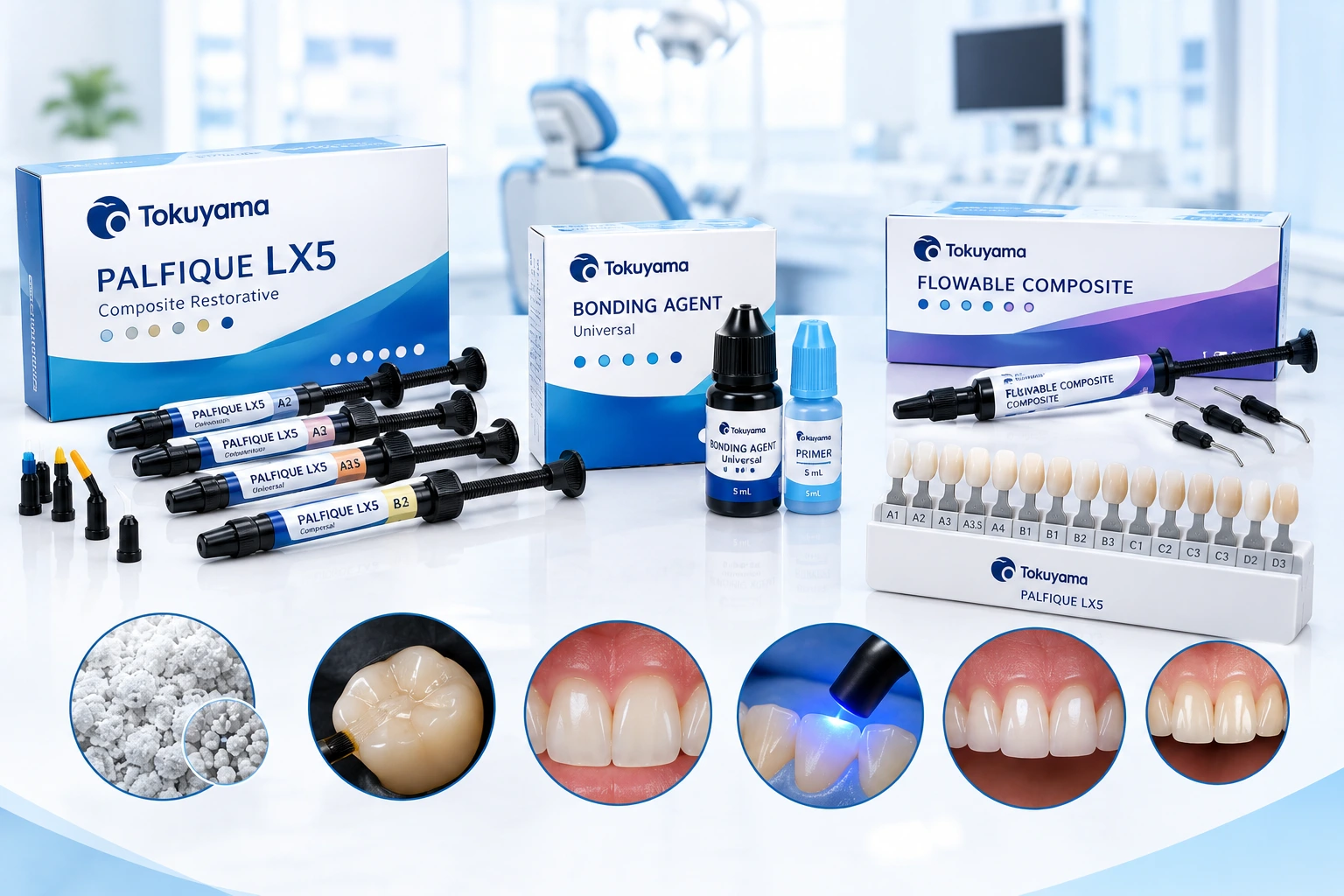
A practical guide to Tokuyama composites, bonding agents, and the Palfique LX5 restorative system — what sets Tokuyama apart and how to choose the right product.
Shade matching is usually the first thing dentists notice when they switch composite brands — and it's often what brings clinicians to Tokuyama in the first place. Tokuyama composite India has built a reputation particularly around how its shades blend into surrounding tooth structure without the chalky or overly opaque look that some budget composites develop over time. This guide covers the core Tokuyama restorative line, the bonding agents that go with it, and what's actually worth stocking.
What Sets Tokuyama's Composite Technology Apart
Tokuyama composites are built around supra-nano filler technology — filler particles packed more densely and uniformly than in many conventional composites. In practical terms, this tends to show up as better polish retention over time (less surface roughening with brushing and normal wear) and generally lower polymerization shrinkage stress, which matters for marginal integrity in Class II and larger restorations. None of this replaces proper layering and curing technique, but the material itself gives you a bit more margin for error on shade blend and surface finish.
Tokuyama Palfique LX5 — Where It Fits in a Restorative Kit
Tokuyama Palfique LX5 price reflects its position as part of Tokuyama's more established restorative line, built for both anterior and posterior direct restorations. It's a reasonable default composite for a general practice that wants one reliable system rather than juggling separate anterior-esthetic and posterior-strength composites — the shade range and handling characteristics are versatile enough to cover most routine restorative work without needing a second brand on the shelf.
Tokuyama Bonding Agent — Matching It to Your Technique
Tokuyama bonding agent selection usually comes down to whether your practice prefers a total-etch or self-etch protocol, since this affects application steps and, to some extent, post-operative sensitivity outcomes in deep preparations. Universal bonding agents that work with either technique have become the more common choice for practices that want flexibility across different case types without stocking multiple adhesive systems. Whichever you choose, consistency in technique — etch time, air-drying, light-cure duration — matters more to bond strength than small differences between competing bonding agent formulations.
Tokuyama Dental Materials Online — What Else Is Worth Stocking
Beyond composites and bonding agents, Tokuyama dental materials online searches often lead clinics to flowable composites and liners from the same line, which pair naturally with the restorative composite for layering technique in deeper cavities. Keeping a flowable alongside your primary restorative composite gives you a better option for cavity liners and small anterior repairs where a heavier-bodied composite is harder to adapt precisely.
Tokuyama Restorative Composite — Posterior vs Anterior Considerations
Tokuyama restorative composite India buyers setting up a new operatory often ask whether they need separate shade kits for anterior and posterior work. For most general practices, a mid-range shade kit covering the common A and B shade groups handles the bulk of posterior work, while a slightly expanded shade selection (including more translucent or enamel shades) is worth adding specifically for anterior esthetic cases where shade blend is more visually critical.
A Practical Note on Storage in Indian Clinic Conditions
Composite handling characteristics — viscosity, working time — can shift in high ambient temperatures if syringes are left out on an open tray through a long clinic day. Storing composite away from direct light and heat, and limiting out-of-fridge time where the product's data sheet recommends refrigeration, helps keep handling consistent and avoids premature material degradation, which matters more in warmer regions than manufacturers' general storage guidelines sometimes make clear.
Frequently Asked Questions
What makes Tokuyama composites different from other brands?
Tokuyama's supra-nano filler technology allows for smaller, more tightly packed filler particles, which generally translates to better polish retention and lower shrinkage stress compared to older-generation composites.
Does Palfique LX5 need a separate bonding agent?
Yes, Palfique LX5 is a composite restorative and still requires a compatible bonding agent as part of the standard adhesive protocol — it is not a self-adhesive material.
Can Tokuyama bonding agents be used with other composite brands?
Generally yes, most universal bonding agents are designed to be compatible across composite brands, but it's worth checking the specific bonding agent's technical data sheet to confirm compatibility with your chosen composite.
How is Tokuyama composite best stored in Indian clinic conditions?
Composites should be stored away from direct heat and light, ideally below room temperature in warmer climates, and used within the manufacturer's shelf-life window to avoid changes in handling or cure characteristics.
In Short
For most general practices, a Palfique LX5 composite kit paired with a compatible universal bonding agent covers the bulk of routine restorative work. Add a flowable composite for liners and small repairs, and keep an eye on storage conditions during warmer months to keep handling consistent case to case.
Browse the full Tokuyama range — composites, bonding agents, and flowables — and check current stock and pricing on each product page.