
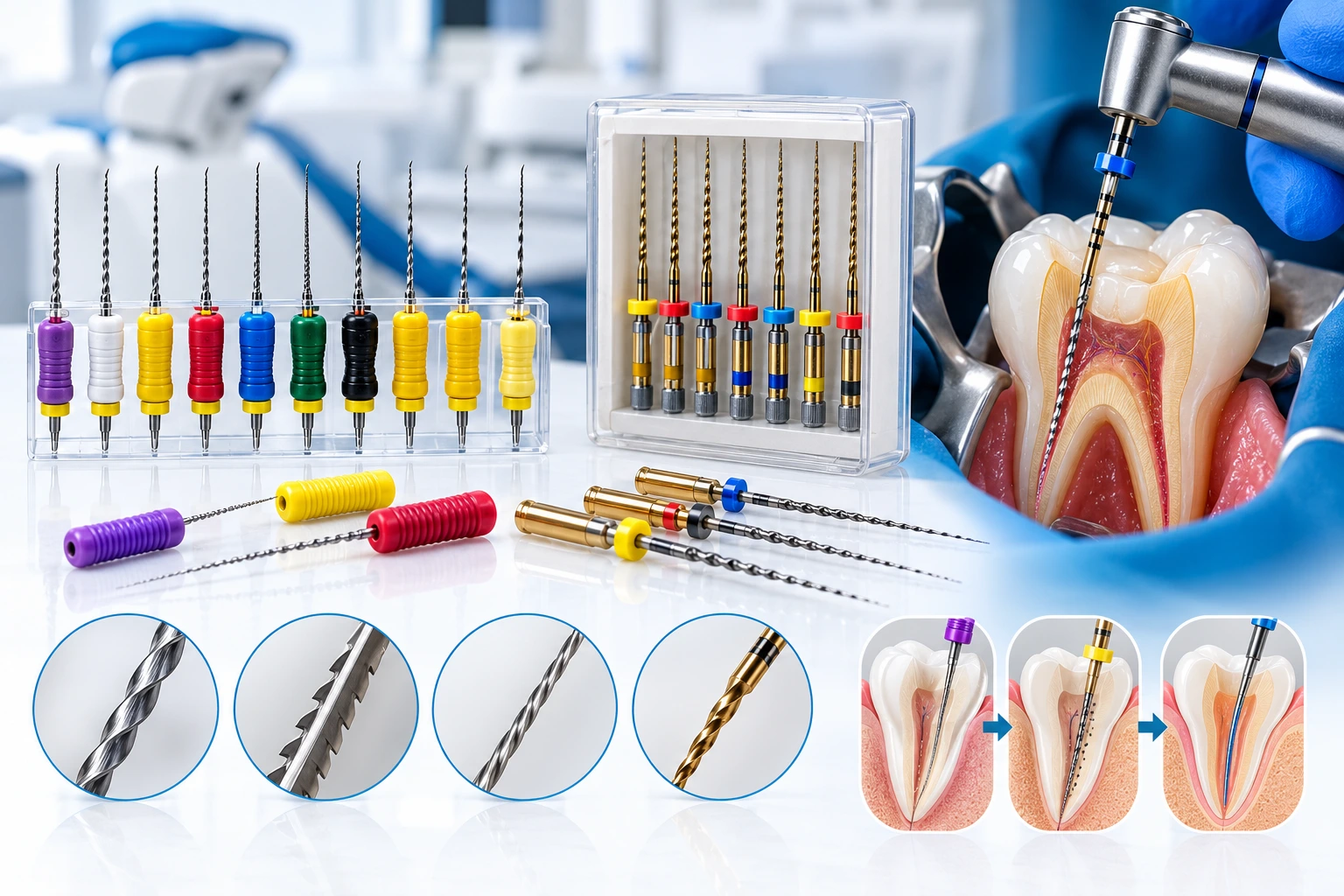
A practical guide to root canal files in India: K-files, H-files, rotary files, ISO colour coding, and what to check before buying Mani and other endodontic files online.
Ask a few dentists which file they reach for first in a tight molar canal and you will get a few different answers, but almost everyone agrees on one thing: a file is only as good as its consistency. A batch where sizes are slightly off, or where flutes dull quickly, costs chair time and risks a separated instrument. That is why buying endodontic files is less about chasing the lowest root canal files price and more about knowing what you are buying.
K-Files, H-Files and Rotary Files: What Each Is For
K-files are made by twisting a tapered metal blank. They are the workhorse of hand instrumentation and can be used with a reaming or filing motion. H-files (Hedstrom files) are machined with a spiral edge and cut mainly on the pull stroke. They remove dentine efficiently, but they are less forgiving, so they should not be twisted or forced. Rotary files, usually made of nickel-titanium, are used with an endodontic motor and shape canals faster once a glide path has been created. Most clinics end up using a mix: hand files to negotiate the canal, rotary files to shape it.
Understanding ISO Sizes and Colour Codes
Hand files follow ISO sizing, and the handle colour tells you the tip size at a glance: size 10 is purple, 15 is white, 20 is yellow, 25 is red, 30 is blue and 35 is green. The colours repeat for larger sizes, so always read the printed number as well as the colour. Files also come in standard lengths, commonly 21 mm, 25 mm and 31 mm. Longer files are useful for long canals and for working through tight access, while shorter files help in posterior teeth where mouth opening is limited.
Mani Files in India: Why They Are So Widely Used
If you have searched for Mani files price, you are in good company. Mani is a Japanese manufacturer, and its hand files are common in Indian clinics, which also makes them easy to restock and compare. The practical advantages for most clinics are availability, consistent sizing across a pack, and a range wide enough to cover hand files, reamers and related canal instruments. As with any brand, check the batch details and packaging on arrival, and buy from a supplier that sources through proper channels.
Buying Endodontic Files Online in India: What to Check
When you buy endodontic files online India, a few checks save a lot of trouble later:
- Sealed, intact packaging with batch or lot details and an expiry or manufacturing date where applicable
- Correct size and length on the label, matching what you ordered, since a pack of the wrong length is a common and avoidable mistake
- Clear brand sourcing, so you know whether the files come from an authorised distributor
- Proper GST invoice for clinic accounts
Unusually low prices for a well-known brand deserve a second look. A file that fractures inside a canal costs far more than the few rupees saved.
How Many Times Can a File Be Reused?
This is one of the most debated questions in endodontics, and the cautious answer is: less than most people think. Small files and rotary files fatigue invisibly and can separate without warning, and the flutes are hard to clean fully. Many clinicians treat files as single-use or follow strict reuse limits from the manufacturer, and discard any file that shows unwinding, bending or visible wear. Building the cost of replacement into your per-case budget is safer than stretching one file across many patients.
Frequently Asked Questions
What is the difference between a K-file and an H-file?
A K-file is made by twisting a tapered metal blank and can be used with a reaming or filing motion, while an H-file is machined with a spiral cutting edge and cuts mainly on the withdrawal stroke. H-files cut more aggressively but are more prone to fracture if used with excessive force or twisting.
How are root canal files colour coded?
ISO standard files use colour-coded handles that correspond to the tip size, for example size 10 is purple, 15 is white, 20 is yellow, 25 is red, 30 is blue, and 35 is green. The colours repeat for larger sizes, so always check the printed size as well.
Should root canal files be reused?
Files can fatigue and fracture unpredictably, and cleaning small flutes is difficult, so many clinicians treat files, especially small sizes and rotary files, as single-use or limit reuse strictly according to the manufacturer's guidance.
Do I need rotary files if I already use hand files?
Not necessarily. Hand files remain essential for negotiating canals and establishing the glide path, and many clinics use them alongside rotary systems, which can shape canals faster once a glide path exists.
In Short
Stock a reliable set of hand files in the sizes and lengths you use most, add rotary files if your caseload justifies them, and treat file replacement as a normal part of case cost rather than an extra. When you compare prices online, compare the sourcing, packaging and invoicing too, not just the number.
Browse the full range of endodontic files on DentalMart, and check current stock and pricing on each product page.